


100000 WHYS : Develop a Scientist’s Way of Thinking
100000 WHYS : Develop a Scientist’s Way of Thinking
 Sparks a scientist's mindset
Full-color pages, zero boredom
Short answers, easy reading
Facts kids remember and repeat
Couldn't load pickup availability
30-Day Money-Back Guarantee
30-Day Money-Back Guarantee
Not satisfied? No problem.
If you’re unhappy with your purchase for any reason, simply contact us within 30 days of delivery and we’ll issue a full refund — no questions asked.
info@getbooklo.com
Shipping Policy
Shipping Policy
We strive to deliver your order as quickly as possible. Our standard shipping time is business 8 - 12 Days
info@getbooklo.com


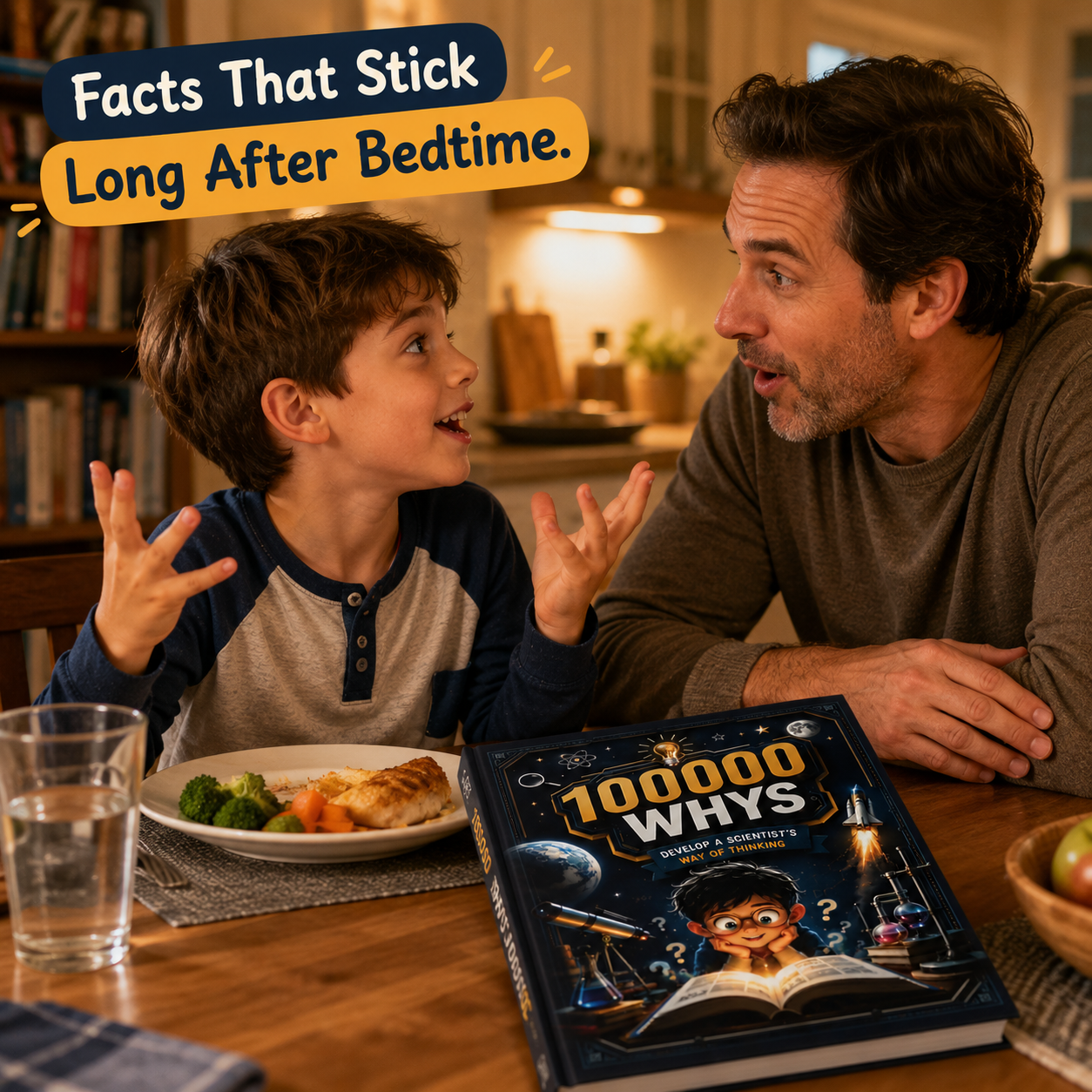

Makes Reading Feel Like Fun
Most kids see a book as homework, something to be pushed through rather than enjoyed. "Why 100,000?" flips that by leading with the questions kids are already dying to ask, like why we fart or how the body works, so turning the page feels like curiosity, not a chore.
Parents don't have to negotiate or bribe to get one more page read. The child does it on their own, and that shift from "have to" to "want to" is what actually builds a lifelong reader.

Built for Every Reading Level
A child who's behind in reading often avoids books entirely because dense text feels discouraging before they even start. Short, clear explanations remove that wall, letting a struggling reader finish a full topic and feel capable instead of frustrated.
Unlike thick chapter books or textbook-style readers, nothing here overwhelms. Each fact stands on its own, so confidence builds page by page instead of collapsing under pressure.

Bright Illustrations That Actually Hold Attention
Most fact books for kids are packed with plain text or dull black-and-white diagrams that lose a child's interest within minutes. Full-color, detailed illustrations on every page keep young eyes locked in, making the information easier to absorb and remember.
That's the difference between a book that sits on the shelf and one a child keeps pulling back out. The visuals do half the teaching.

Facts Kids Actually Remember and Repeat
The real test of any learning book isn't whether a child reads it, it's whether anything sticks. Families report kids recalling facts hours later, retelling them to parents completely unprompted, which shows genuine understanding instead of surface-level skimming.
That retention comes from how the content is written: concise, specific, and tied to questions kids find genuinely funny or fascinating. It's learning that survives past the last page, not just information they forget by dinner.